Many people believe student loans can never be wiped out in bankruptcy. That isn't quite true, but it's harder than with other debts. Here's how it works for federal student loans and what to check before you go that route.
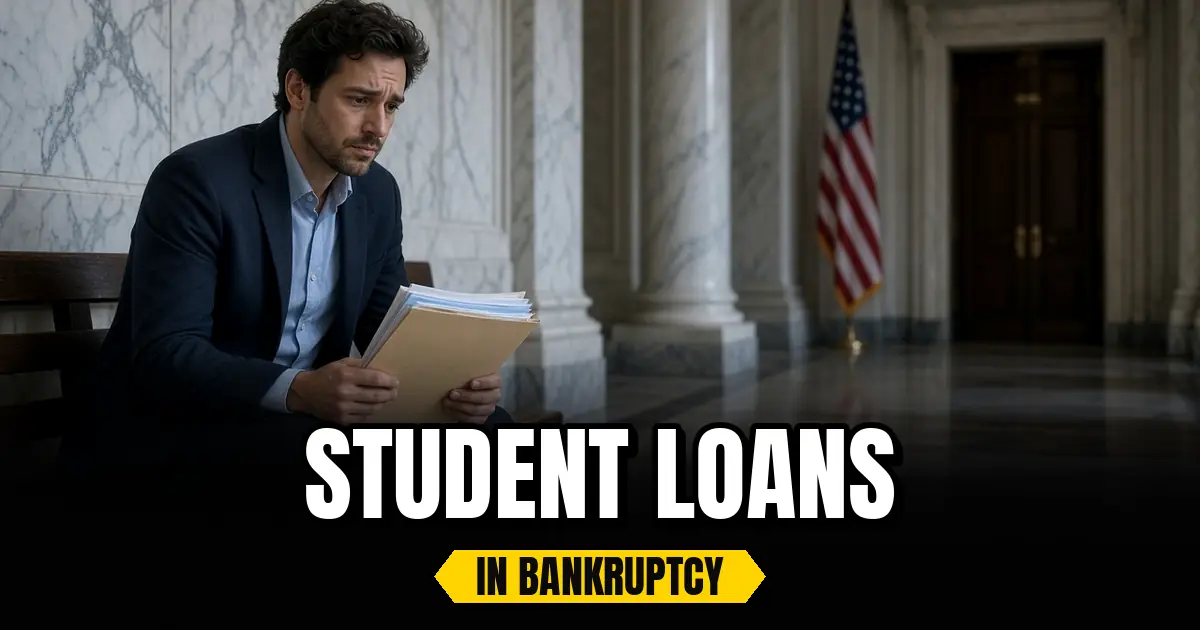
This page is general information, not legal advice. Legal Touch doesn't file bankruptcy cases. Talk to a bankruptcy attorney about your situation.
If the court discharges a Direct Loan, the Department of Education discharges it too (34 CFR 685.212(c)).
These federal discharges are handled through the Department of Education:
If your loans are in default, getting out of default by consolidation or rehabilitation can also stop collections while you sort out your options.
We pull your federal loan records and check whether you may qualify for a federal discharge, such as Borrower Defense, before you take a step as big as bankruptcy. Call 800-261-2946 for a free review.
Yes, but only if the court finds that repaying them would be an undue hardship. That takes a separate adversary proceeding within your bankruptcy case.
It's a standard form introduced in November 2022. You list your finances and repayment history so government attorneys can decide whether to agree that your loans should be discharged.
No. We help with federal discharges and loan programs. For bankruptcy, talk to a bankruptcy attorney.
Often, yes. If your school misled you or closed, a Borrower Defense or Closed School Discharge may cover your loans without a court case.
Find out which federal programs may fit your loans. Check My Eligibility or call 800-261-2946.
Questions first? Contact our team.
Sources: 34 CFR 685.212(c) (Direct Loan discharge when a bankruptcy court discharges the loan); 11 U.S.C. 523(a)(8) (student loans not dischargeable unless excepting them would impose an undue hardship); U.S. Department of Justice guidance to its attorneys on student loan bankruptcy cases, November 17, 2022 (attestation process).
Legal Touch is not a law firm and does not give legal or tax advice. Results are not guaranteed. Every decision is made by the U.S. Department of Education, a court, or your loan holder, and Legal Touch is not affiliated with any government agency. You can apply for federal programs yourself, for free, at StudentAid.gov. We will never ask for your StudentAid.gov username or password.

Attorney-formed document preparation for Title IV federal student loan program applications. Not a law firm.


Sales Key LLC dba Legal Touch Borrower Defense · (800) 261-2946 · Copyright . All rights reserved. Designed by Explore Logics
Sales Key LLC dba Legal Touch Borrower Defense, 641 E San Ysidro Blvd Num B3328, San Ysidro, CA 92173