If you attended American Career College (ACC) and you’re still carrying federal student loan debt, here’s the uncomfortable truth: schools don’t end up in lawsuits, state enforcement actions, and major Borrower Defense settlements by accident.
This page is built for one purpose: to show you the types of public “paper trail” items that can strengthen a Borrower Defense to Repayment (BDR) application—and to help you take the next step fast.
ACC appears on Exhibit C of the Sweet v. Cardona settlement list (the case that set timelines and relief rules for hundreds of thousands of Borrower Defense applicants).
If you’re not sure whether you fall into the “class” vs. “post-class” settlement buckets, don’t guess—file correctly and document it.
Borrower Defense claims typically get stronger when your evidence points to:
Now let’s get into the public record items connected to ACC that you can reference in your narrative.
ACC is a California based institution, which means it falls under oversight by the California Bureau for Private Postsecondary Education (BPPE).
Two types of BPPE documents are especially useful in a Borrower Defense file:
Recent public BPPE documents include:
How to use this in your Borrower Defense narrative:
Pro tip (high ROI): Quote the document date + title and attach the PDF (or link) as an exhibit in your application packet.
In July 2025, the California Civil Rights Department announced a settlement with American Career College regarding alleged violations of the state’s Fair Chance Act (employment-related background check timing and compliance).
Is this the same as “student recruitment deception”? Not necessarily. But it can still help because it:
How to use it (correctly):
A widely circulated report describes a class action lawsuit allegation (2012) that ACC drew down federal student aid but failed to disburse funds to students as expected (the allegation described students not receiving funds intended for costs like housing/transportation).
Again—allegations aren’t final findings. But for Borrower Defense:
If this matches your experience, your evidence list should include:
ACC’s published student consumer info includes language describing mandatory arbitration and class action waiver terms for disputes. This matters for one reason:
Borrower Defense is not a lawsuit. It’s an administrative relief process with the U.S. Department of Education. So, if you felt boxed out of court options or pressured into signing documents you didn’t fully understand, Borrower Defense may still be available—especially if you can show:
Every case is personal. But in healthcare career programs, Borrower Defense narratives often revolve around a few repeating themes:
Check your eligibility now → https://defenseclaims.com/check-eligibility
Borrower Defense approvals often come down to how clearly you can show a known misconduct pattern and how it harmed you. Use these pages to strengthen your “pattern + personal harm” narrative:
https://defenseclaims.com/all-universities
And if you want examples of how we structure school misconduct evidence pages (so you can mirror the structure in your own claim), explore our misconduct library and related articles across the site (for example, schools covered under broader “predatory student loans” topics).
If you’re writing your statement today, use this structure:
If you want a guided, step-by-step walkthrough, use the DIY link here:
Borrower Defense DIY Guide →
https://defenseclaims.com/borrower-defense-diy-guide
You don’t win Borrower Defense by being angry. You win by being organized. Most denied applications fail because the borrower:
If you attended ACC and you’re serious about relief, your best move is to build a clean evidence packet and file strategically.
Start your loan relief request today → https://defenseclaims.com/contact

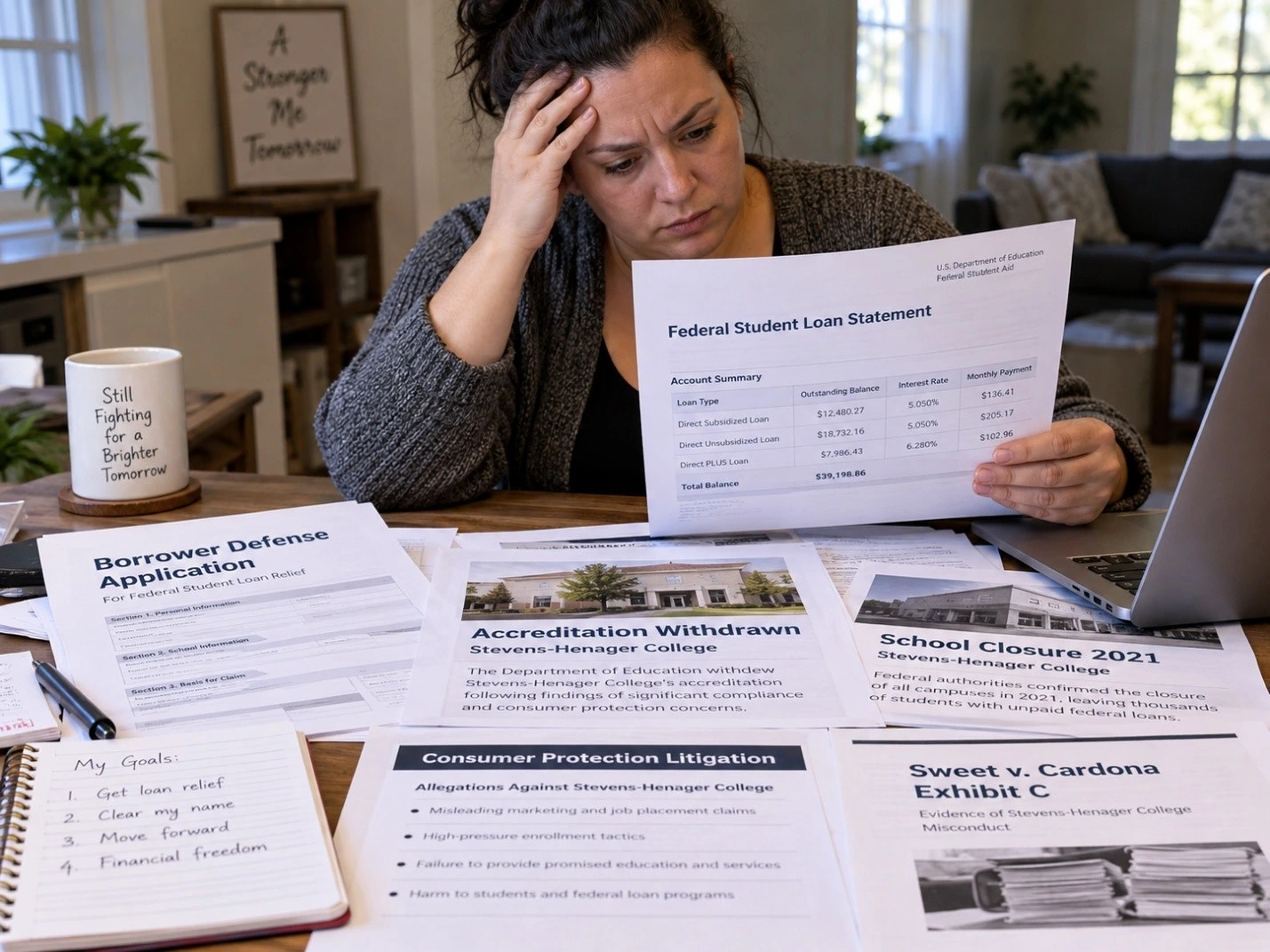
Attended Stevens-Henager College? Discover its lawsuits, accreditation loss, 2021 closure, Sweet v. Cardona listing, and student loan forgiveness options...
Read More...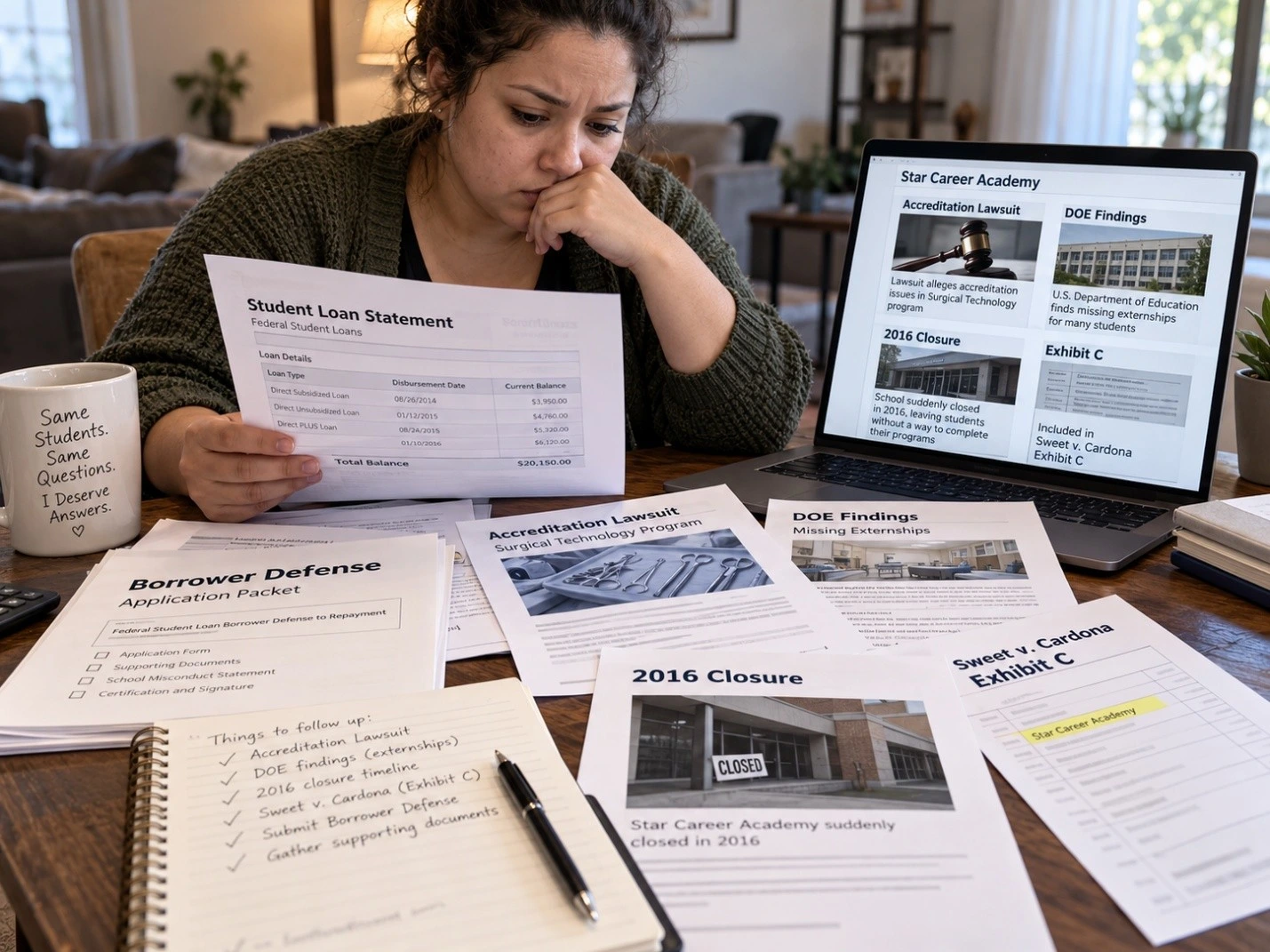
Attended Star Career Academy? Discover its accreditation lawsuit, federal investigations, 2016 closure, Sweet v. Cardona listing, and student loan forgiveness options...
Read More...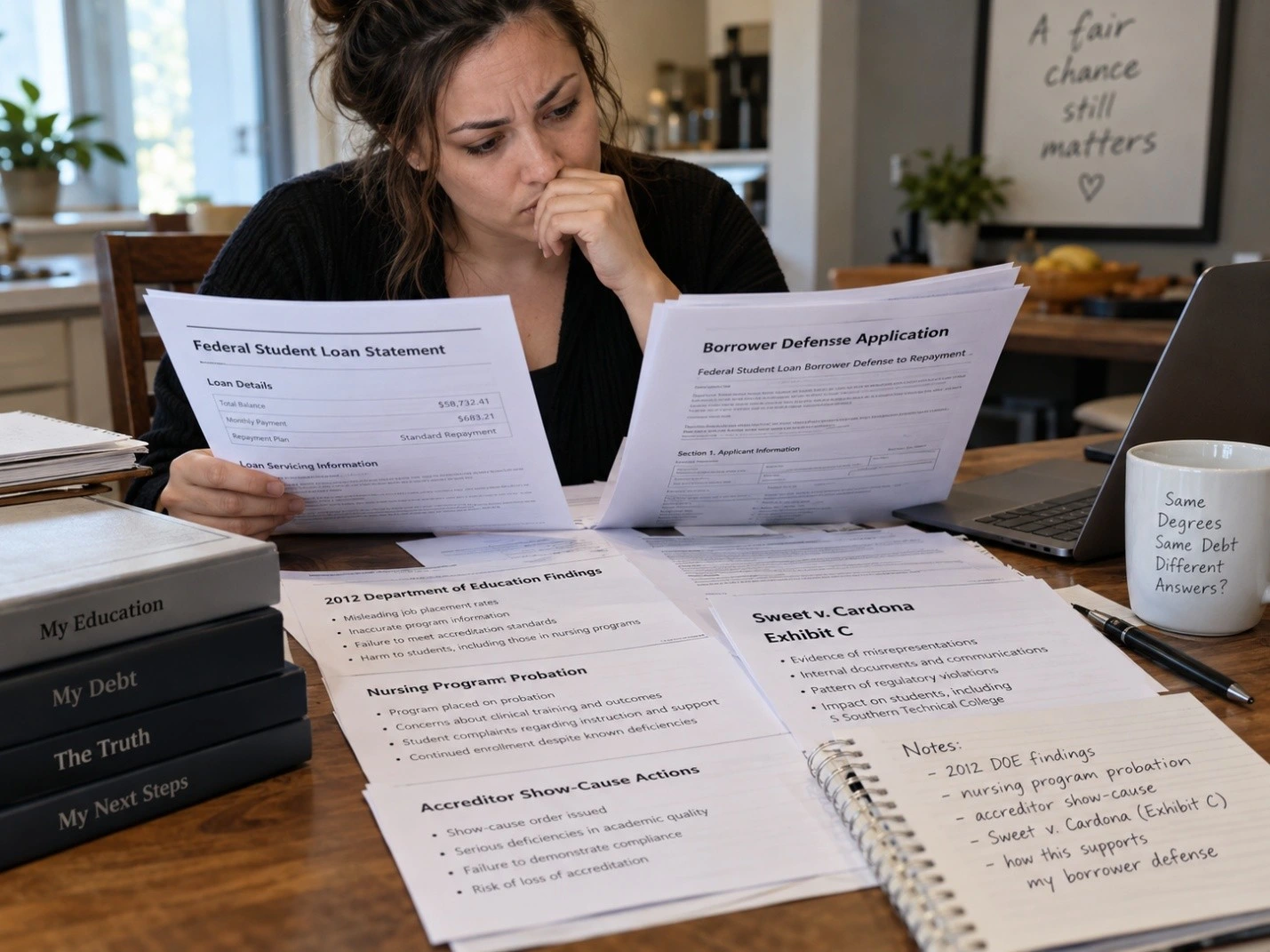
Southern Technical College faced federal financial aid findings, nursing probation, and accreditor scrutiny. Explore Sweet v. Cardona and loan forgiveness options....
Read More...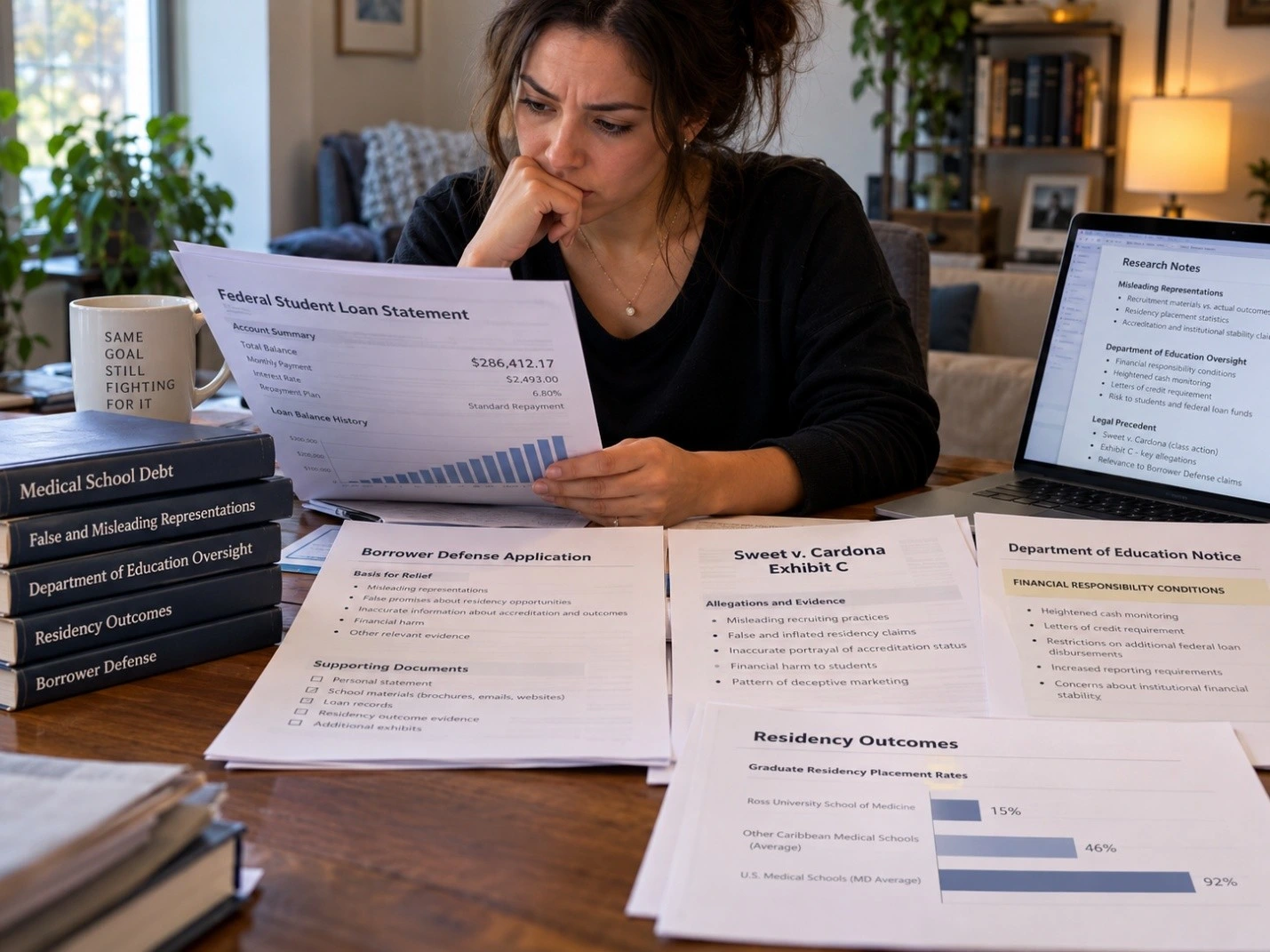
Attended Ross University School of Medicine? Discover lawsuits, student debt concerns, Sweet v. Cardona Exhibit C, and Borrower Defense options....
Read More...
Attended Remington College? Federal investigations, a DOJ settlement, recruiting complaints and Sweet v. Cardona records may matter for Borrower Defense...
Read More...
Attended Purdue University Global or Kaplan University? Learn about Sweet v. Cardona Exhibit C, government investigations, recruiting concerns, settlements, and potential Borrower Defense student loan relief...
Read More...
Attended New England Institute of Art? Learn about government findings, a major Massachusetts judgment, Art Institutes student loan discharges, and Borrower Defense options....
Read More...
Attended New England College of Business and Finance? Learn about its 2018 Massachusetts AG settlement, recruitment allegations, Sweet v. Cardona listing, and Borrower Defense options....
Read More...
Attended Mount Washington College or Hesser College? See its Sweet v. Cardona listing, Kaplan regulatory history, and Borrower Defense options....
Read More...
Former Missouri College student reviewing federal student loan and Borrower Defense documents after learning about the Career Education Corporation multistate settlement, alleged recruiting and job-placement practices, Missouri College's 2016 closure, and its inclusion in the corrected Sweet v. Cardona Exhibit C...
Read More...
Attended Miller-Motte College? A major student lawsuit, Department of Education references, accreditation actions, and Sweet v. Cardona Exhibit C could provide important evidence for a Borrower Defense claim....
Read More...
Attended Miami-Jacobs Career College? Discover lawsuits, accreditation disputes, Ohio regulatory findings, Sweet v. Cardona, and possible Borrower Defense relief....
Read More...
The highest level of education and consulting in Borrower Defense for Student Loans.

Legal Touch Borrower Defense - Copyright . All rights reserved. Designed by Explore Logics