If you attended Miami-Jacobs Career College and were left with federal student loan debt, there is an important history you should know.
Miami-Jacobs was not simply a career school that later disappeared. Public records document student litigation over program accreditation, arbitration awards to former students, regulatory concerns involving multiple academic programs, nursing-program deficiencies, and its inclusion in Sweet v. Cardona Settlement Agreement Exhibit C.
For former students who believe Miami-Jacobs misled them about accreditation, certification eligibility, educational quality, clinical training, career opportunities, or another important reason they enrolled, those records may be relevant to a Borrower Defense to Repayment application.
One of the most significant public records involves former surgical technology students.
In 2010, the Dayton Daily News reported that arbitrators awarded five former Miami-Jacobs students between 20,000 dollars and 60,000 dollars each after litigation concerning the accreditation status of the school's surgical technology program. The students alleged that Miami-Jacobs represented the program as accredited when it was not and that, after graduating, they were unable to immediately sit for the certification examination because of the accreditation problem. The newspaper reported that the students' attorney said arbitrators found breach of contract or consumer-protection violations in the individual proceedings.
Read the Dayton Daily News report on the Miami-Jacobs student cases
For a Borrower Defense applicant who personally received similar representations about program accreditation, professional certification, licensing eligibility, or employability, this history could be particularly important corroborating evidence.
The concerns were not limited to one program.
A January 2011 document from the Ohio Board of Regents states that Miami-Jacobs had received only provisional authorization for numerous associate-degree programs while it addressed areas of noncompliance with state standards. The issues identified included the rigor of general education, assessment of incoming students, faculty credentials, library services, availability of clinical-placement sites, and mechanisms for measuring program outcomes.
The document says Delta Career Education Corporation subsequently withdrew the authorization applications on behalf of Miami-Jacobs locations in Dayton, Springboro, Troy, Sharonville, Cleveland, and Columbus, and the Chancellor accepted that withdrawal as being in the best interests of Ohio citizens.
See the Ohio Board of Regents Miami-Jacobs authorization record
That record may matter to borrowers whose own experiences involved poor instruction, inadequate faculty, unavailable clinical placements, educational services, or representations about the quality of their degree program.
An Ohio appellate court decision documents a separate history involving Miami-Jacobs' practical nursing program.
According to the court, the Ohio Board of Nursing identified deficiencies between 2007 and 2009, Miami-Jacobs entered a consent agreement allowing the program to continue conditionally, and a hearing examiner later found the school had failed to comply with several rules and had violated terms of that agreement. The Board voted in January 2011 to withdraw conditional approval and deny full approval.
There is an important qualification: a trial court later vacated that Board order because of procedural due-process problems and remanded the matter, and the appellate court dismissed the Board's appeal on jurisdictional grounds. The appellate decision therefore should not be characterized as a final judicial finding that Miami-Jacobs committed fraud. But the documented history of deficiencies and regulatory proceedings can still be relevant evidence when it matches a borrower's own experience.
Read Miami-Jacobs Career College v. Ohio Board of Nursing
In Deck v. Miami Jacobs Business College Company, former students alleged that they paid tuition, incurred substantial debt, and sacrificed wages or earning capacity to obtain what they said had been falsely represented as accredited and marketable degrees, certifications, education, or careers. Their complaint included allegations under consumer-protection, fraud, contract, RICO, and other theories.
The federal court did not decide those allegations on their merits in the cited ruling. Instead, it stayed much of the dispute for arbitration. That distinction matters, but the litigation remains useful public history for borrowers researching representations similar to those they personally encountered.
Review the federal court order in Deck v. Miami Jacobs
There is another significant fact for former students: Miami-Jacobs Career College appears by name in Sweet v. Cardona Settlement Agreement Exhibit C, listed under Delta Career Education Corporation.
View the official Sweet v. Cardona Exhibit C school list
This is important historical Borrower Defense context. However, being a former Miami-Jacobs student or having attended an Exhibit C school does not, by itself, guarantee approval of a new Borrower Defense claim today. Eligibility and the applicable legal standard depend on the borrower's loans, dates, allegations, evidence, and individual circumstances. Federal Student Aid specifically encourages borrowers to explain what the school represented, who made the representation, when it occurred, why they relied upon it, and how it harmed them.
Your case may deserve closer examination if Miami-Jacobs told you that a program was properly accredited, that completing it would qualify you for a license or certification, that employers would recognize your credential, that sufficient clinical training or placements would be available, that credits would transfer, or that the program would lead to specific career opportunities—and you later discovered that what you were told was materially different from reality.
The strongest Borrower Defense applications connect the public evidence to what actually happened to the individual borrower.
If you attended Miami-Jacobs Career College and still have federal student loan debt, do not assume you have to simply live with it without investigating what happened.
If you want to prepare your own application, start with our Borrower Defense Do It Yourself Guide.
You can also review misconduct evidence involving other colleges and career schools or search our full list of universities and career schools.
Review your enrollment records, advertisements, emails, catalogs, financial-aid documents, accreditation statements, certification requirements, and employment history.
The details of what you were promised—and what actually happened—could make the difference in a Borrower Defense claim.
✅ Ready to Start?
Check your eligibility now — or get expert help with your claim.
Start your loan relief request today

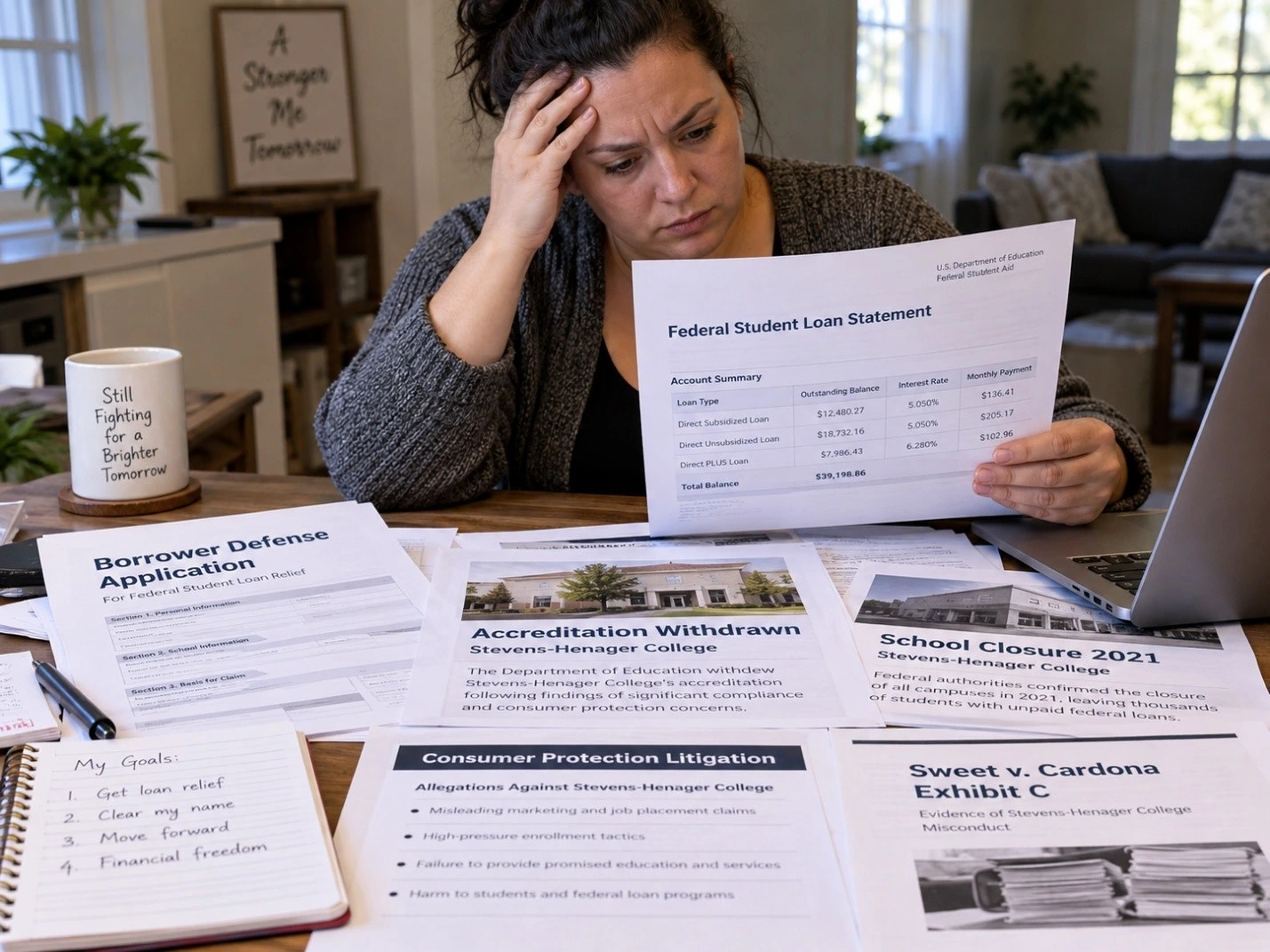
Attended Stevens-Henager College? Discover its lawsuits, accreditation loss, 2021 closure, Sweet v. Cardona listing, and student loan forgiveness options...
Read More...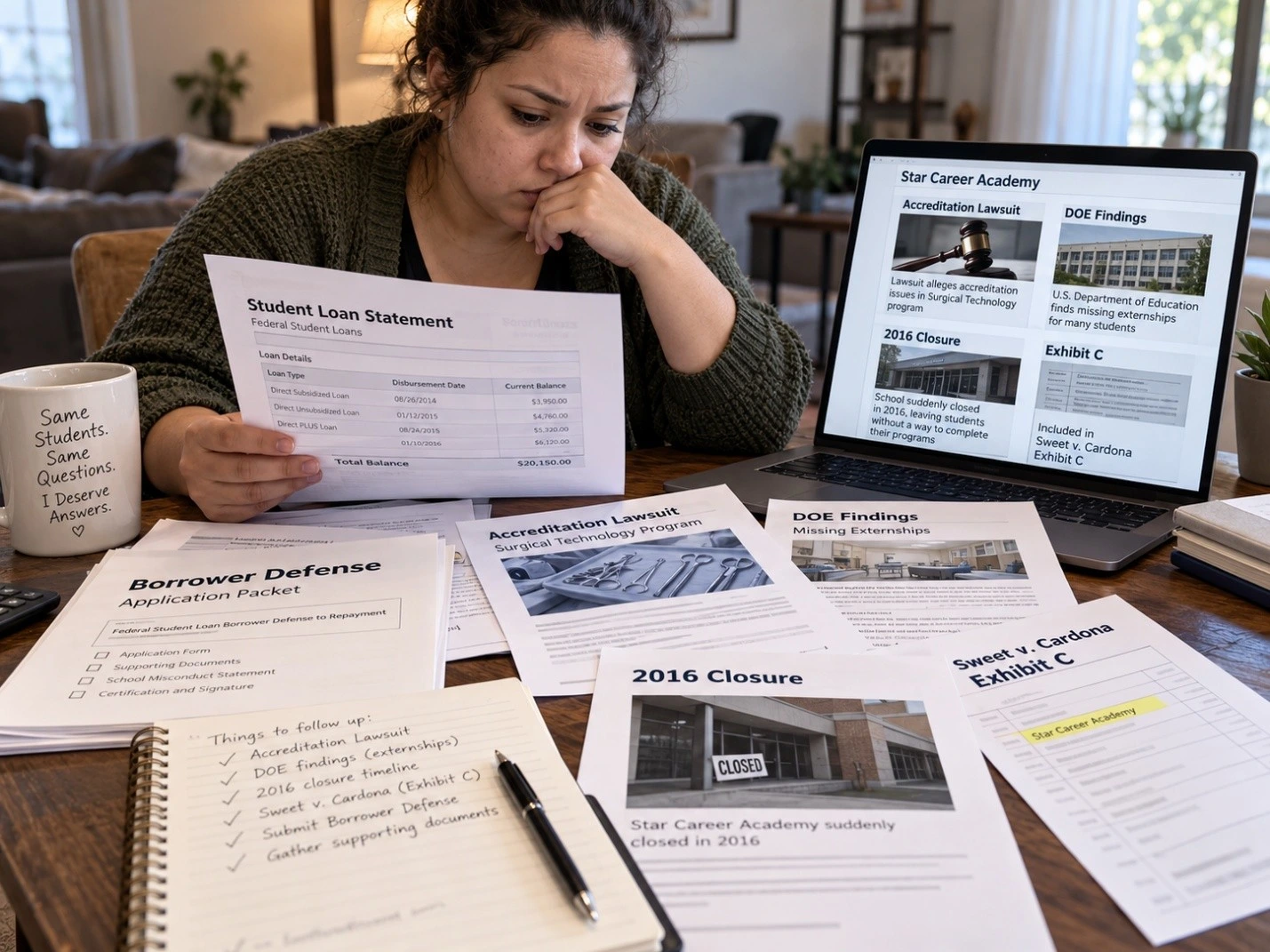
Attended Star Career Academy? Discover its accreditation lawsuit, federal investigations, 2016 closure, Sweet v. Cardona listing, and student loan forgiveness options...
Read More...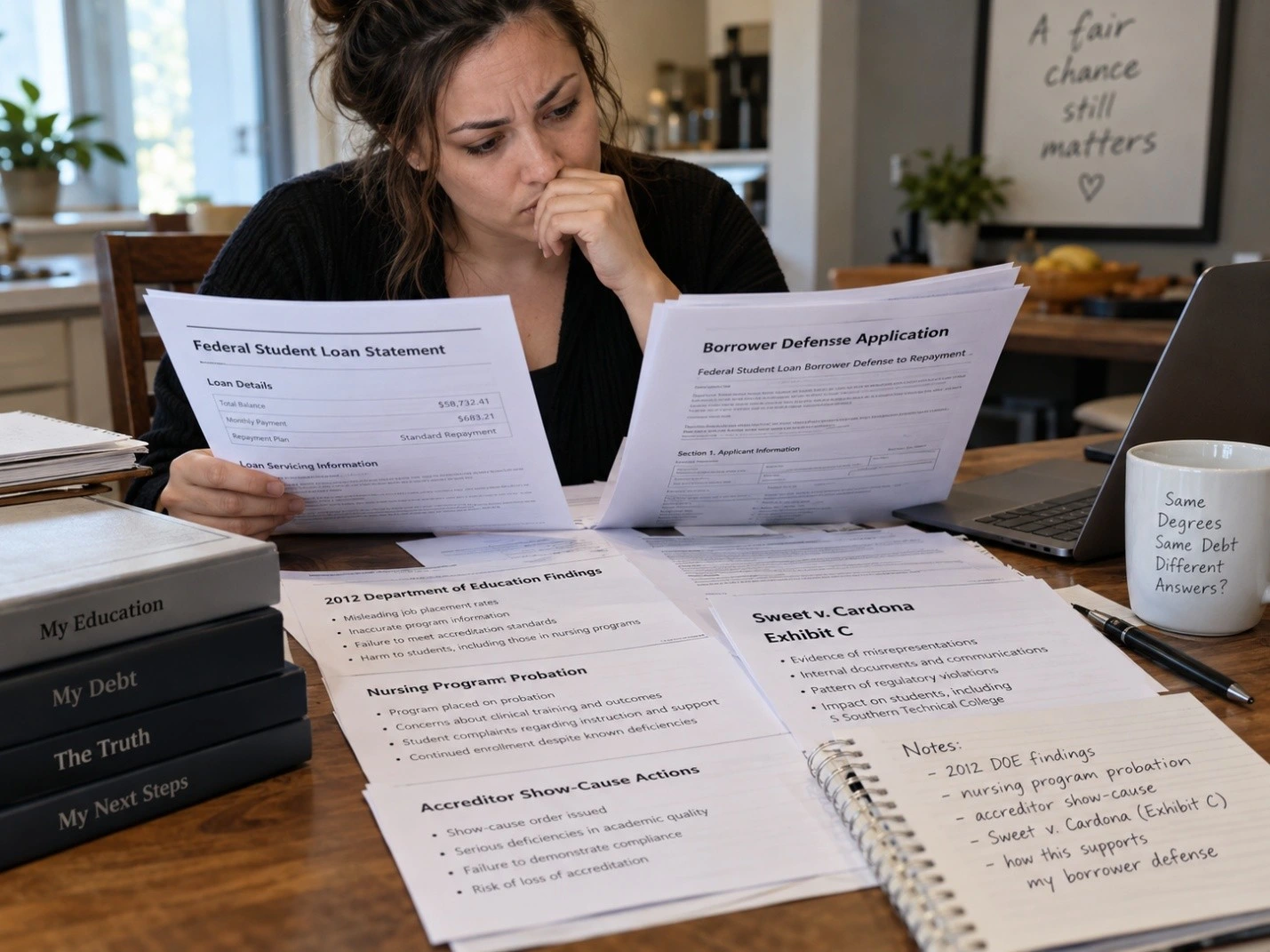
Southern Technical College faced federal financial aid findings, nursing probation, and accreditor scrutiny. Explore Sweet v. Cardona and loan forgiveness options....
Read More...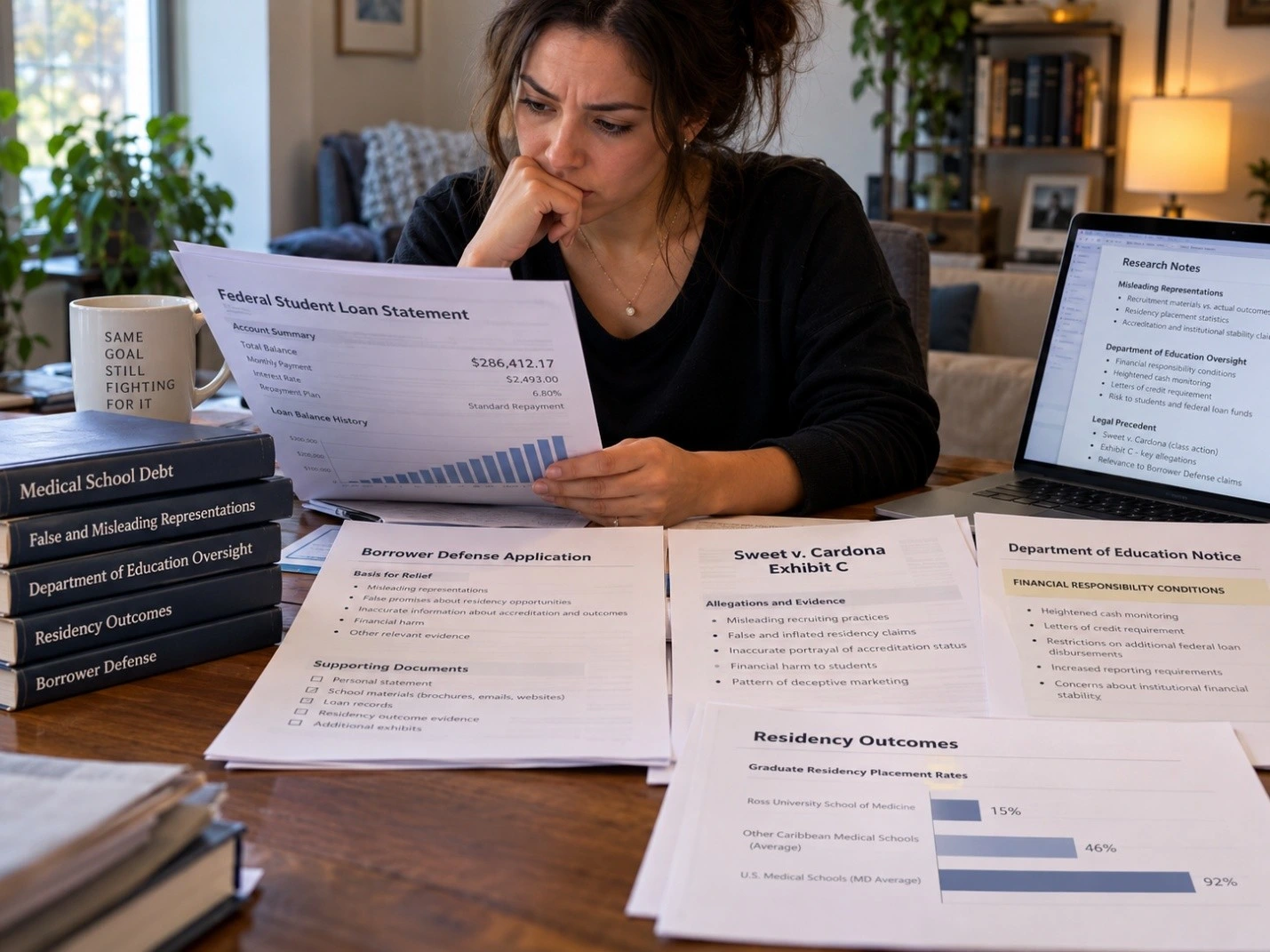
Attended Ross University School of Medicine? Discover lawsuits, student debt concerns, Sweet v. Cardona Exhibit C, and Borrower Defense options....
Read More...
Attended Remington College? Federal investigations, a DOJ settlement, recruiting complaints and Sweet v. Cardona records may matter for Borrower Defense...
Read More...
Attended Purdue University Global or Kaplan University? Learn about Sweet v. Cardona Exhibit C, government investigations, recruiting concerns, settlements, and potential Borrower Defense student loan relief...
Read More...
Attended New England Institute of Art? Learn about government findings, a major Massachusetts judgment, Art Institutes student loan discharges, and Borrower Defense options....
Read More...
Attended New England College of Business and Finance? Learn about its 2018 Massachusetts AG settlement, recruitment allegations, Sweet v. Cardona listing, and Borrower Defense options....
Read More...
Attended Mount Washington College or Hesser College? See its Sweet v. Cardona listing, Kaplan regulatory history, and Borrower Defense options....
Read More...
Former Missouri College student reviewing federal student loan and Borrower Defense documents after learning about the Career Education Corporation multistate settlement, alleged recruiting and job-placement practices, Missouri College's 2016 closure, and its inclusion in the corrected Sweet v. Cardona Exhibit C...
Read More...
Attended Miller-Motte College? A major student lawsuit, Department of Education references, accreditation actions, and Sweet v. Cardona Exhibit C could provide important evidence for a Borrower Defense claim....
Read More...
Attended MedTech College in Indiana? Federal findings, low nursing exam results, regulatory action, school closure, and Sweet v. Cardona may support a Borrower Defense claim....
Read More...
The highest level of education and consulting in Borrower Defense for Student Loans.

Legal Touch Borrower Defense - Copyright . All rights reserved. Designed by Explore Logics