If you attended Miller-Motte College, Miller-Motte Technical College, or Miller-Motte Business College and feel the education you received was not what you were promised, there is public evidence you should know about before continuing to carry that federal student loan debt.
Miller-Motte's history includes a student lawsuit resulting in a $53,481 jury verdict, documented accreditation and student retention actions, and inclusion in Sweet v. Cardona Settlement Agreement Exhibit C. Even more notably, the U.S. Department of Education itself cited the Miller-Motte student case while discussing Borrower Defense standards.
One of the most important public cases is Supplee v. Miller-Motte Business College, Inc.
Benjamin Supplee enrolled in Miller-Motte's Surgical Technology program. Miller-Motte's written policies called for criminal-background screening during admission, in part to identify issues that could prevent students from participating in required clinical placements.
According to the North Carolina Court of Appeals, Miller-Motte did not conduct the required background check when Supplee was admitted. The check occurred later, after he had been enrolled, and he was ultimately unable to complete the required clinical portion of the program.
A jury found in Supplee's favor on his breach-of-contract claim and awarded $53,481. The North Carolina Court of Appeals concluded that there was sufficient evidence of breach of contract for the issue to have been submitted to the jury.
Read Supplee v. Miller-Motte Business College
Because the Department of Education later specifically cited Supplee v. Miller-Motte when discussing why breach of contract can be relevant to Borrower Defense where a school fails to fulfill a specific promise involving educational services paid for with federal student loans.
That makes Supplee far more than simply another lawsuit involving a college. It is a Miller-Motte case that actually appeared in the Department's own Borrower Defense regulatory discussion.
Public records provide another potential area of evidence.
In December 2016, Miller-Motte College's Wilmington campus received an ACICS student-achievement show-cause directive after reported campus retention rates of 54 percent in 2015 and 56 percent in 2016, which ACICS said were consistently below its standard.
Miller-Motte's own later consumer-information disclosure also identifies several prior ACICS actions, including:
Miller-Motte's disclosure states that it voluntarily withdrew from ACICS accreditation on January 18, 2018, when it obtained accreditation through ACCSC following its change of ownership.
View the Department of Education's ACICS documentation
For a former student who was told something materially different about program quality, completion prospects, accreditation, clinical eligibility, or the educational services that would actually be available, records like these may become relevant corroborating evidence. The strength of a Borrower Defense claim, however, depends on what the school actually represented or failed to disclose to that particular borrower.
There is another major fact former Miller-Motte students should know.
The Sweet v. Cardona Settlement Agreement Exhibit C specifically lists all three Miller-Motte names under former owner Delta Career Education Corporation:
View Sweet v. Cardona Exhibit C documentation
Sweet is especially significant in the history of the federal Borrower Defense program. As of 2026, litigation over implementation of the settlement has continued, including relief for qualifying post-class applicants whose claims were not decided by court-ordered deadlines.
Important: Being a Miller-Motte student or seeing the school on Exhibit C does not automatically qualify every new applicant for loan discharge. Sweet settlement rights depend on when a Borrower Defense application was filed and whether the borrower is part of the settlement. Borrowers filing outside those settlement groups must establish eligibility under the Borrower Defense rules applicable to their loans.
If you attended Miller-Motte, think carefully about what you were told before you enrolled or while you were deciding whether to stay and continue borrowing.
Potential issues worth investigating include promises or representations about job placement, expected earnings, transferability of credits, accreditation, program completion, clinical or externship eligibility, professional licensing, total program cost, financial aid, or the specific career services and educational resources you would receive.
Under the federal Borrower Defense program, school misconduct that affected a borrower's decision to enroll, continue attending, or take out loans may potentially support discharge of qualifying federal student loans.
Learn more about Federal and State loan relief programs
Old emails, enrollment documents, advertisements, catalogs, screenshots, text messages, financial-aid paperwork, job-placement communications, transcripts, licensing information, and even archived school webpages can help establish what Miller-Motte represented and what actually happened.
Do not assume your student loans are simply something you have to live with forever without first examining your options.
If Miller-Motte made important promises that influenced you to enroll or borrow federal student loans and those promises proved false or misleading, DefenseClaims.com can help you examine the available evidence and determine whether a Borrower Defense application may be appropriate.
Start by reviewing your Miller-Motte experience while documents and details are still available.
Want to prepare the application yourself?
Use our Borrower Defense Do It Yourself Guide
Want to see evidence involving other colleges?
Explore Schools With Usable Misconduct Evidence
Looking for another school?
Search the Complete DefenseClaims School List
Miller-Motte's public record includes something former students should not ignore: a successful student breach-of-contract verdict involving promised educational procedures, an appellate decision preserving that verdict, Department of Education reliance on that very case in its Borrower Defense rulemaking discussion, documented accreditor actions, and Miller-Motte's inclusion in Sweet v. Cardona Exhibit C.
Those facts do not guarantee loan forgiveness. But if your own Miller-Motte experience involved misleading promises or important information you were not told, they may provide valuable evidence and context for a carefully documented Borrower Defense application.
✅ Ready to Start?
Check your eligibility now — or call for expert help with your claim.
Start your loan relief request today

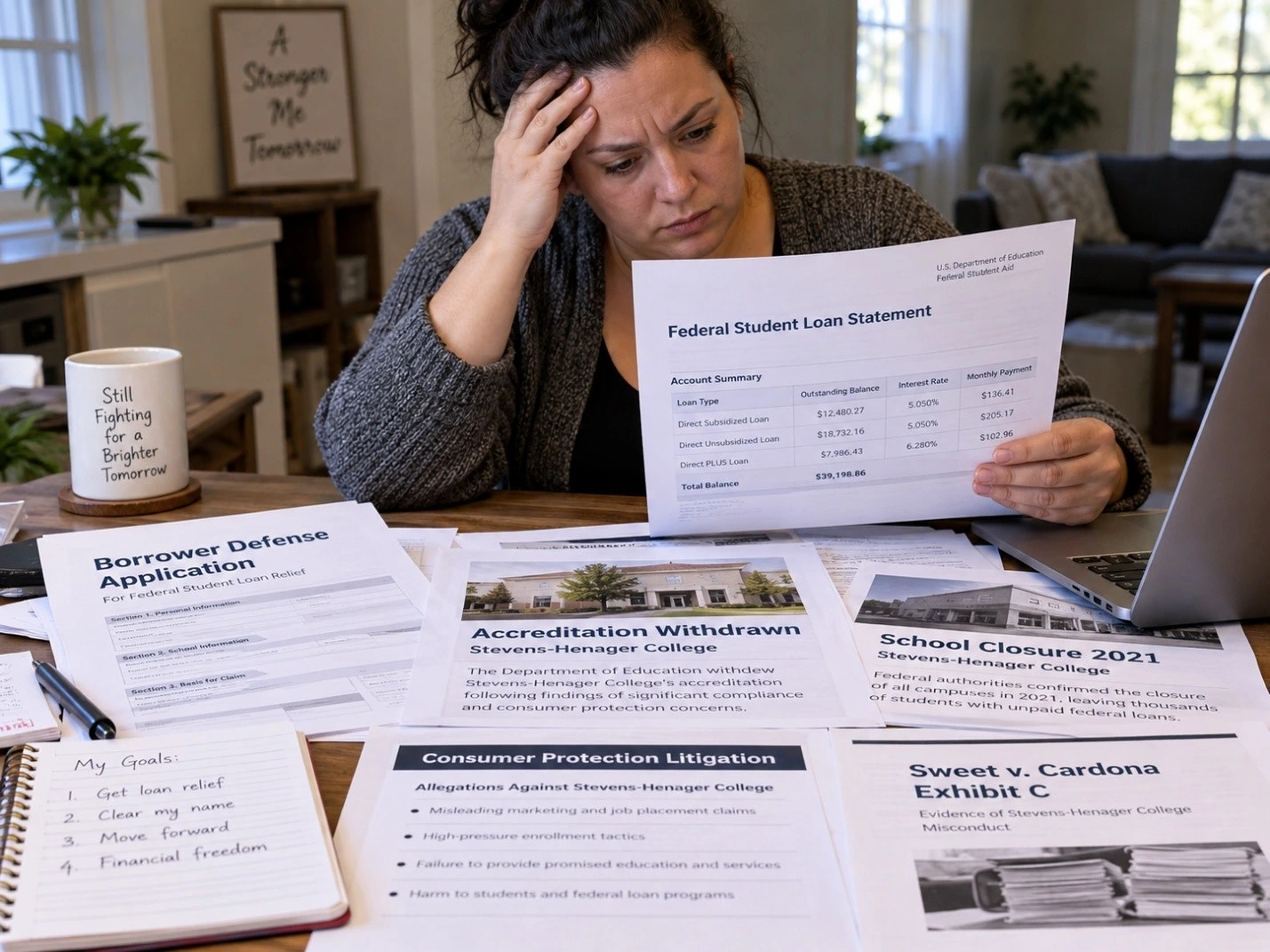
Attended Stevens-Henager College? Discover its lawsuits, accreditation loss, 2021 closure, Sweet v. Cardona listing, and student loan forgiveness options...
Read More...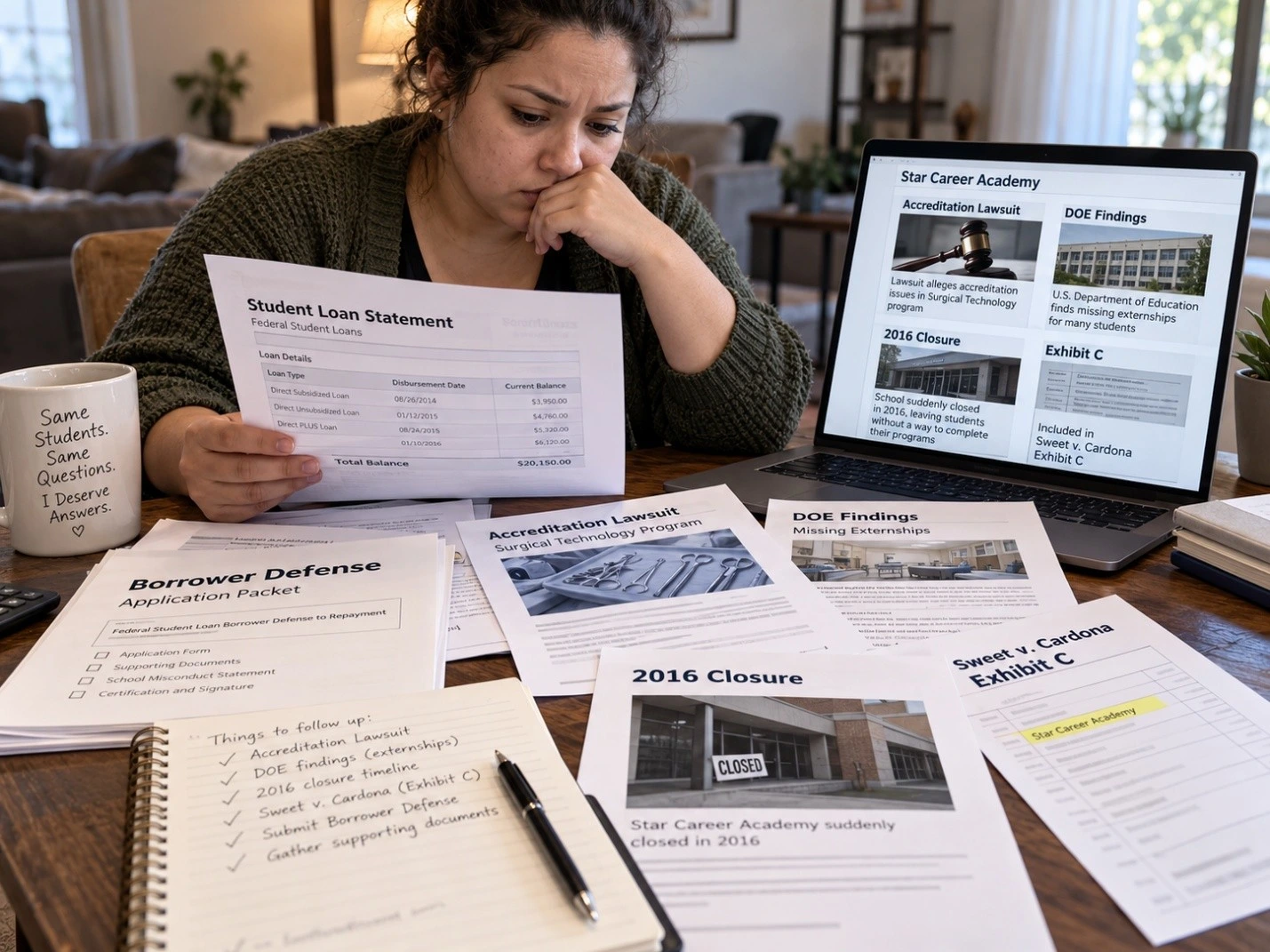
Attended Star Career Academy? Discover its accreditation lawsuit, federal investigations, 2016 closure, Sweet v. Cardona listing, and student loan forgiveness options...
Read More...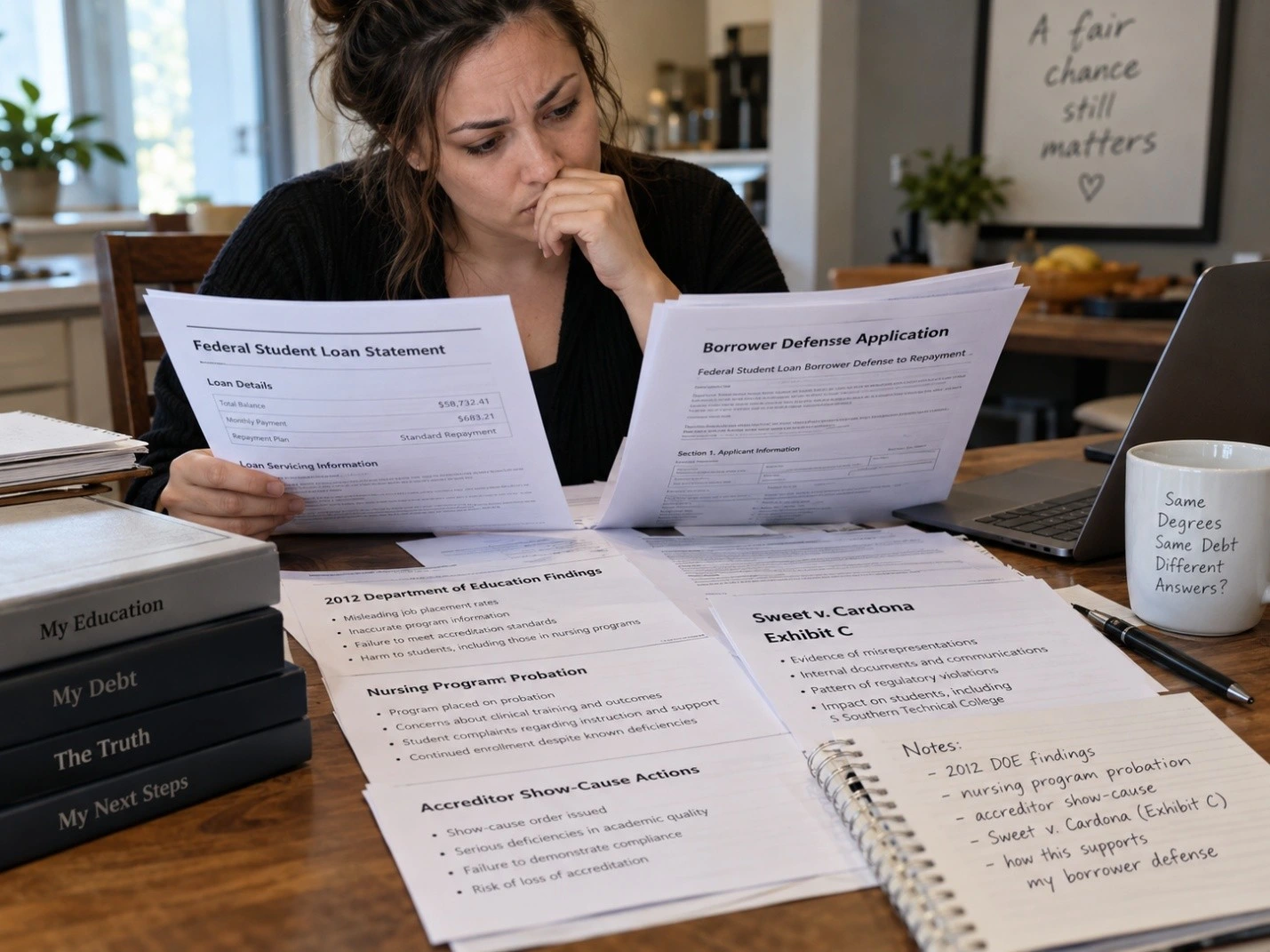
Southern Technical College faced federal financial aid findings, nursing probation, and accreditor scrutiny. Explore Sweet v. Cardona and loan forgiveness options....
Read More...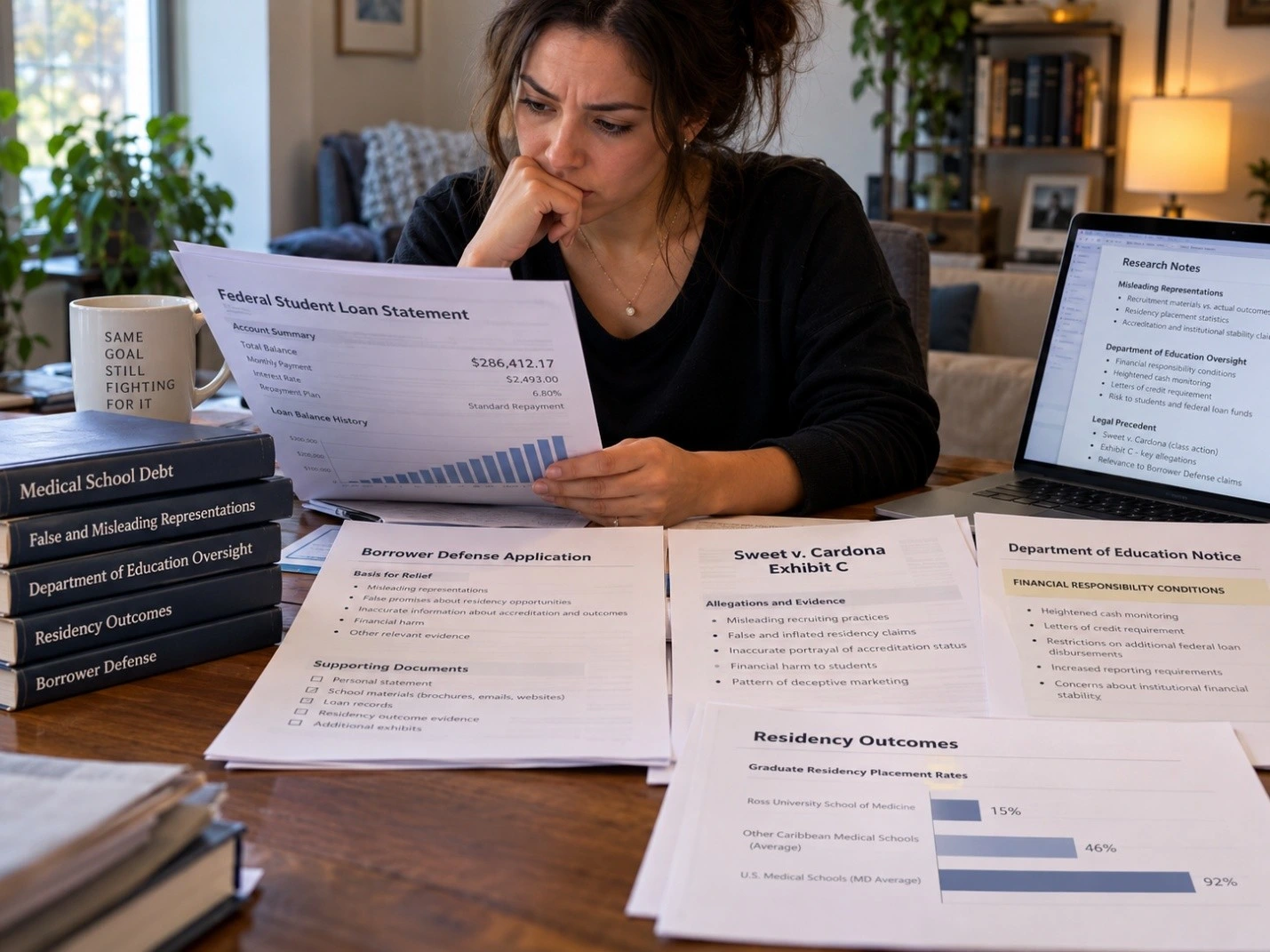
Attended Ross University School of Medicine? Discover lawsuits, student debt concerns, Sweet v. Cardona Exhibit C, and Borrower Defense options....
Read More...
Attended Remington College? Federal investigations, a DOJ settlement, recruiting complaints and Sweet v. Cardona records may matter for Borrower Defense...
Read More...
Attended Purdue University Global or Kaplan University? Learn about Sweet v. Cardona Exhibit C, government investigations, recruiting concerns, settlements, and potential Borrower Defense student loan relief...
Read More...
Attended New England Institute of Art? Learn about government findings, a major Massachusetts judgment, Art Institutes student loan discharges, and Borrower Defense options....
Read More...
Attended New England College of Business and Finance? Learn about its 2018 Massachusetts AG settlement, recruitment allegations, Sweet v. Cardona listing, and Borrower Defense options....
Read More...
Attended Mount Washington College or Hesser College? See its Sweet v. Cardona listing, Kaplan regulatory history, and Borrower Defense options....
Read More...
Former Missouri College student reviewing federal student loan and Borrower Defense documents after learning about the Career Education Corporation multistate settlement, alleged recruiting and job-placement practices, Missouri College's 2016 closure, and its inclusion in the corrected Sweet v. Cardona Exhibit C...
Read More...
Attended Miami-Jacobs Career College? Discover lawsuits, accreditation disputes, Ohio regulatory findings, Sweet v. Cardona, and possible Borrower Defense relief....
Read More...
Attended MedTech College in Indiana? Federal findings, low nursing exam results, regulatory action, school closure, and Sweet v. Cardona may support a Borrower Defense claim....
Read More...
The highest level of education and consulting in Borrower Defense for Student Loans.

Legal Touch Borrower Defense - Copyright . All rights reserved. Designed by Explore Logics